Serving North Toronto, East York & Midtown Toronto. Proudly Canadian!


Toronto 2026 Deck Price Guide (PT vs Cedar vs Composite vs PVC)
Deck cost in Toronto in 2026 runs from about $30 to $95 per square foot installed, depending on the material, site conditions, and project complexity. Pressure-treated lumber is the most affordable option upfront. Composite and PVC cost more to install but typically cost less to own in the long run. This deck price guide is based on real GTA projects, not generic online estimates, so you can compare quotes with confidence.
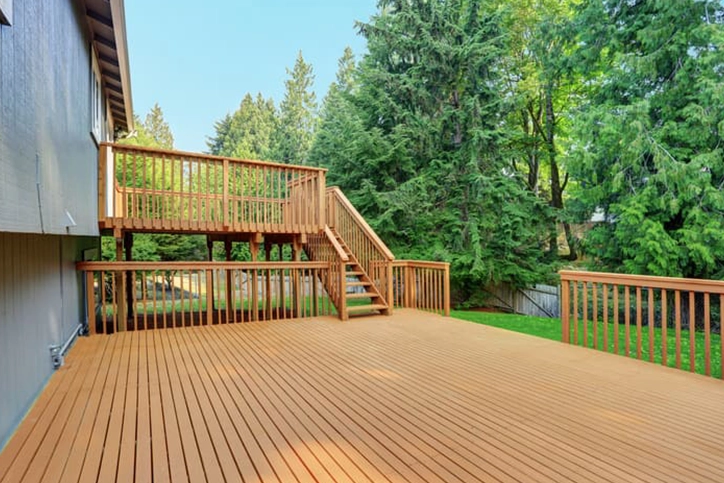
Key Takeaways
- Toronto deck prices in 2026 run from about $30 to $95 per square foot installed, depending on material.
- Pressure-treated wood has the lowest upfront cost.
- Composite typically becomes cost-competitive with a maintained wood deck around the 8 to 12 year mark.
- A deck more than 60 cm above grade needs a City of Toronto building permit.
- Access, mature trees, deck height, railings, and stairs can affect the price more than many homeowners expect.
- A professionally built deck can recover roughly 68% to 83% of its cost at resale.
If you have been searching for a Toronto deck price guide, you have probably noticed that deck price information online is all over the map. One website says a composite deck costs $12,000. Another says $25,000. Then you get a quote somewhere in between and wonder which number is realistic.
All of those numbers can be correct. A 200-square-foot deck in Lawrence Park can cost much more than a 200-square-foot deck elsewhere in the city. The size is identical, but access, height, railings, permits, and tree protection can change the final price quickly.
As a custom deck builder in North Toronto, we spend a lot of time helping Toronto homeowners understand where costs come from before construction begins. The goal is not to steer you toward a particular material. It is to give you enough information to choose the option that fits your budget, maintenance expectations, and long-term plans for the property.
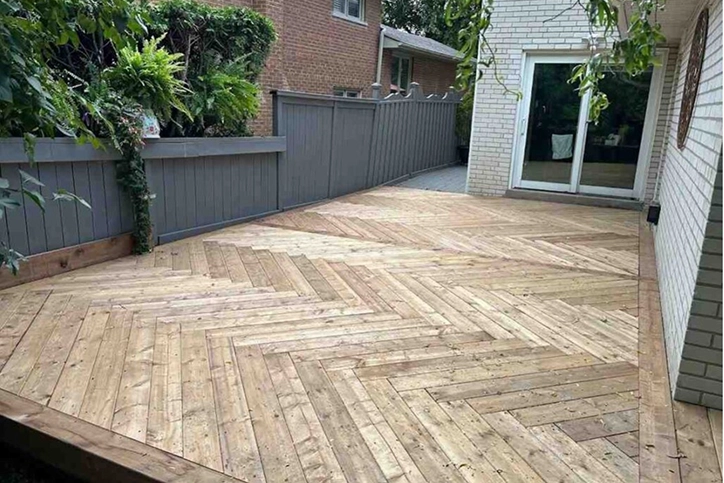
2026 Toronto Deck Cost: Quick Reference
Most Toronto homeowners pay about $30 to $95 per square foot for a new deck, installed. What you pay depends on the material, the deck size, and what you add on.
The figures below assume a deck of about 300 square feet with railings and stairs, full demolition and removal of the existing deck, and a picture-frame border. Design changes will move the final number.
| Material | Cost per sq ft | 12×16 deck (about 190 sq ft) | 300 sq ft deck |
| Pressure-treated wood | ~$50 | ~$9,500 | ~$15,000 |
| Cedar (knotty Western Red) | ~$65 | ~$12,350 | ~$19,500 |
| Composite (mid to high tier) | ~$80 | ~$15,200 | ~$24,000 |
| Luxury PVC | ~$95 | ~$18,050 | ~$28,500 |
These numbers give you a starting point, but they do not tell the whole story. The biggest mistake we see is comparing deck projects by square foot alone. Two decks of the same deck size can end up thousands of dollars apart because of site conditions and design choices. We cover those factors below.
Pressure-Treated Wood Decks: Cost, Lifespan, and When to Choose It
Pressure-treated wood has the lowest entry cost, but the long-run gap narrows once staining is counted.
When homeowners ask for the most budget-friendly way to handle a deck project, pressure-treated lumber is usually where the conversation starts. In 2026, a pressure-treated deck in Toronto runs about $50 per square foot installed.
The advantages are clear: lower upfront cost, a classic look, boards that are easy to replace individually, and materials available across the GTA. It is a proven, reliable option, well suited to replacing a rotting deck on a tight budget, and to basic structures such as a back-door landing with stairs or a simple ground level deck.
The trade-off is more maintenance. Pressure-treated wood needs regular care to look good, and over time it can develop checking, splinters, and warping. In our climate, staining and sealing every two to three years should not be postponed. Toronto’s freeze-thaw cycle is hard on exposed wood: moisture gets into the surface, temperatures swing, and small problems become big ones quickly.
A pressure-treated deck typically lasts 15 to 20 years, depending on sun exposure and drainage. Professional staining in Ontario typically costs between $1,423 and $2,568 each time, and over a decade those costs add up. Many homeowners also book a power washing before each restain.
That does not make pressure-treated a bad choice. For homeowners planning to move within several years, or those who simply prefer real wood and accept periodic upkeep, it remains a practical option. It is just not a permanent, maintenance-free one.
Cedar Decks: Cost, Lifespan, and When to Choose It
Cedar costs more than pressure-treated wood, often about double the price for the boards alone, and it is the natural-wood choice for homeowners who will keep up with maintenance. In 2026, cedar decks run about $65 per square foot installed.
We use knotty Western Red Cedar for its classic look and texture. It has a pleasant, sauna-like aroma when wet, and it weathers to a silvery-grey patina if left unfinished. Cedar also resists insects and moisture better than pressure-treated lumber. It sits in the middle ground between basic wood and composite or PVC.
Premium cedar has become more expensive in recent years, and clear, high-grade boards push pricing higher still. Like pressure-treated wood, cedar needs staining and sealing, and it needs attention to keep weather from wearing it down. The difference is that cedar often ages more gracefully. Homeowners in Rosedale and Lawrence Park often choose it because it suits mature landscapes and traditional architecture.
The trade-off is straightforward: you pay more than for pressure-treated wood and still commit to a maintenance schedule. For homeowners who want authentic wood rather than a manufactured alternative, cedar is a strong candidate.
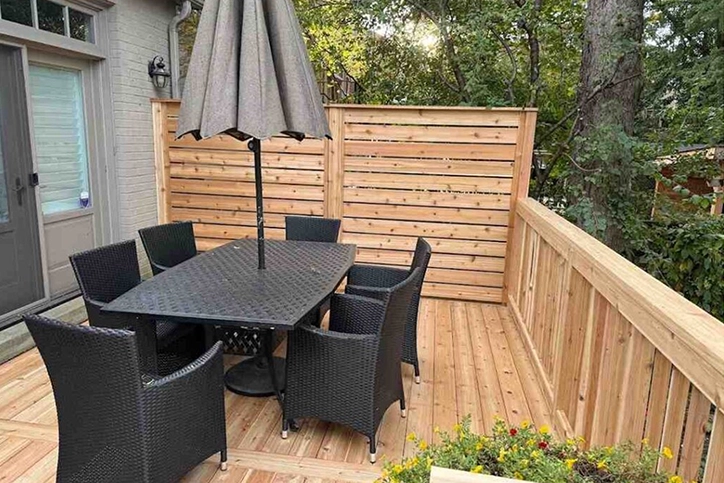
Composite Decks: Cost, Lifespan, and When to Choose It
Composite decking is the buy-once-cry-once option: it costs more upfront and pays back over the long run. In 2026, a mid-to-high-tier composite deck runs about $80 per square foot installed.
The conversation we have most often is pressure-treated versus composite. Most homeowners already know composite costs more. What they want to know is whether the extra investment makes sense for their situation.
Composite material is typically made from recycled wood fibers and plastic, and it offers 25 years of consistent appearance with low maintenance. There is no staining schedule, no sealing every few years, and no weekends spent sanding. Most homeowners wash the surface with soap and water a couple of times a year and skip the high-pressure power washing. Composite is also splinter-free, which matters for families with children and pets on the deck barefoot all summer, and it gives a uniform finish in full sun.
When maintenance is counted, composite typically becomes cost-competitive with a maintained wood deck around the 8 to 12 year mark, once professional sanding, staining, and repairs are added up.
Quality varies widely. There is a real performance gap between builder-grade and premium composite decking. We work with Trex, TimberTech, and TruNorth, and choose based on site conditions and sun exposure.
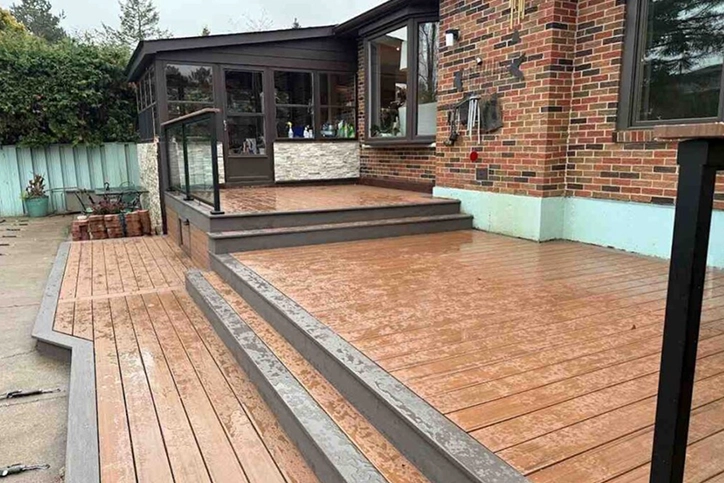
Composite is not right for every homeowner, but for families planning to stay put, it is the material we discuss most. To see how different materials look once built, browse our completed deck portfolio.
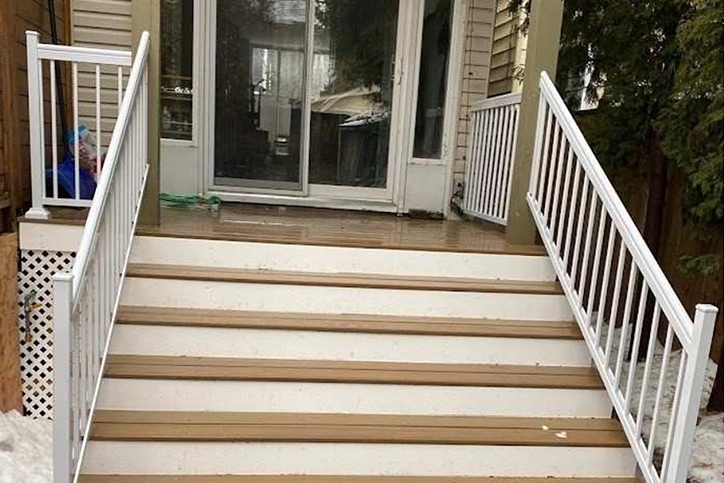
PVC Decks: Cost, Lifespan, and When to Choose It
PVC is the highest-cost option and the lowest-maintenance one. In 2026, luxury PVC decking runs about $105 per square foot installed.
Unlike composite, PVC contains no wood fibre, so it does not absorb moisture the way wood-based products can. That is a real advantage for properties with pools, water features, heavy shade, or damp conditions. It offers stable colour options, stays clean, feels comfortable and grippy underfoot, and keeps its new-deck look for decades.
PVC suits open, sunny North York properties where other materials can bake, dry out, and look tired quickly. Maintenance is simple: occasional rinsing with a garden hose. One trade-off is heat. Some PVC products run warmer than composite in direct afternoon sun, especially on south-facing decks with little shade, so we talk through colour choice with homeowners during material selection.
For homeowners who want the least possible upkeep, PVC usually makes the shortlist. One practical note for any low-maintenance deck: snow removal is easiest with a plastic shovel, and a metal blade can scratch the surface.
What Drives Deck Prices Up or Down in North Toronto?
Two decks of the same size can differ by thousands of dollars in final cost, depending on height, railings, and site conditions. This is the section that surprises homeowners most.
Square footage matters, but it rarely tells the full story. Every additional 50 square feet adds roughly $3,000 to $5,250, depending on material. What changes the cost fastest are the conditions around the build:
- Deck height and multiple levels. Elevated decks and multi level decks need more framing, more structural support, and sometimes engineering review.
- Design complexity. A basic rectangle costs less than a shaped or wraparound layout. Picture framing, diagonal inlays, and breaker boards add labour costs and material waste, and they are what separate a finished-looking deck from a basic platform.
- Stairs and landings. Every stair, turn, and landing adds material and labour.
- Railings. Railings are required once the drop exceeds 600 mm (24 inches), and openings cannot let a 100 mm (4 inch) sphere pass through. Wood railings typically cost $30 to $60 per linear foot, aluminium $60 to $120, and glass railings $150 to $300 per linear foot. Basic railings keep the budget down, while glass adds a premium look and a premium price.
- Additional features. Lighting, built-in seating, and other extras add to the total, and they are cheaper to plan in from the start than to add later.
Then there are the site conditions we see across our North Toronto service area. In Leaside, Lawrence Park, and parts of East York, narrow side-yard access is common, and some gates are under 36 inches wide. That matters when hundreds of boards, framing members, and railing components have to reach the backyard.
Mature trees add another layer. Many properties in Lawrence Park, Lytton Park, Rosedale, and Bedford Park need a Tree Declaration Form, and protective fencing may be required while construction is under way.
As an illustration, two 200-square-foot North Toronto decks can land at very different prices. A ground level deck in pressure-treated wood with wood railings and easy access might come in around $14,000. A composite deck with glass railings, elevated framing, tight side-yard access, and tree protection might reach $28,000. Same size, very different project.
Hidden costs to ask about
Several factors rarely appear in an online price calculator:
- Utilities and infrastructure. Gas lines, electrical, telecommunications, and irrigation can conflict with footing locations and force changes to the plan.
- Plumbing and HVAC conflicts. BBQ gas feeds, dryer vents, sump discharge, AC lines, and hose bibs may need to be relocated around the deck.
- Grading and drainage. Swampy or low-lying areas need grading or drainage work to protect the deck’s structure and lifespan.
- Site access. Narrow side yards, shared driveways, and lane-only access add extra time, as does protecting finished landscaping.
- Hidden structural problems. House rot discovered during demolition has to be repaired and prevented from returning before deck construction continues.
Ways to Save Money on a New Deck
You can keep the total in check without cutting corners:
- Match the material to your plans. If you will sell in a few years, pressure-treated wood may be the right materials choice. If you will stay for decades, composite or PVC can save money in the long run.
- Simplify the design. A basic rectangle with fewer levels, fewer corners, and simpler stairs reduces framing and labour.
- Choose railings carefully. Wood or aluminium railings cost far less than glass.
- Plan early. Booking in the off season and starting the permit process early gives you more scheduling flexibility and avoids rushing decisions.
- Bundle projects. Planning a deck together with fencing, hardscaping, or other outdoor living space work avoids rework and repeated site costs.
Never save money by skipping necessary permits. Unpermitted work can cause problems when you sell.
How to Compare Deck Quotes
Most folks find quotes hard to compare, because each contractor writes them differently. Get at least three quotes, and make sure each covers the same things:
- The material brand and product line, not just “composite”
- Framing, footings, and structural work
- Railings, stairs, and landings
- Demolition and disposal of the existing deck
- Necessary permits, Tree Declaration Forms, and engineering
- Itemised labour and materials, with a clear payment schedule
- Proof of WSIB coverage and liability insurance
A much lower quote usually means something is missing. Ask what was left out before you commit.
For a quote specific to your property, contact us with photos and accurate measurements and we will go from there.
Do You Need a Building Permit for a Deck in Toronto?
Yes, if the deck is more than 60 cm (24 inches) above grade. We handle the application for every Kerta project, so you do not have to work through the red tape.
The City of Toronto requires a building permit for decks and porches more than 60 centimetres above grade, and since January 12, 2026, applications go through the City’s online portal. Uncovered platforms below that height may be exempt from a permit, but zoning rules still apply. As of January 1, 2026, the permit fee for residential decks, porches, and carports is $214.79.
For many North Toronto properties, the building codes are not the only step. Because mature trees are common in Lawrence Park, Leaside, and Rosedale, a Tree Declaration Form is often part of the approval process too.
Permits also matter after construction. When a property changes hands, lawyers, lenders, buyers, and appraisers often ask for documentation showing the work was done properly and approved. We manage the permit process for our clients, including applications and supporting documents, so homeowners do not have to navigate City requirements alone. If you are unsure whether your project needs a permit, request a free estimate and we will walk you through it. Once the paperwork is approved, construction begins.
How Much Value Does a New Deck Add to a Toronto Home?
A permitted, well-built deck can return roughly 68% to 83% of its cost at resale and makes the outdoor space more attractive to buyers. Most homeowners do not build a deck purely for resale value, though. They build it to barbecue, entertain, relax, and spend time with family.
According to the 2024 Zonda Cost vs. Value Report, wood decks recover about 82.9% of their cost at resale and composite decks about 68.2%, which places decks among the stronger-performing exterior projects.
In Leaside, Lawrence Park, Davisville Village, and Rosedale, outdoor living space carries extra appeal because lot values are high and homeowners want to get the most from the space they have. Many homeowners combine a deck with features such as pergolas, creating dedicated areas for dining, entertaining, and relaxation.
For larger projects, Kerta is a Financeit-approved contractor, which lets qualified applicants spread the cost over time. You can also browse our completed deck portfolio to see what different investment levels look like once built.
Frequently Asked Questions
How much does a deck cost in Toronto in 2026?
Most decks in Toronto cost about $30 to $95 per square foot installed, from around $30-50 for pressure-treated wood to around $95 for luxury PVC. For a 300-square-foot deck with railings and stairs, that works out to roughly $16,000 to $30,000. Material has the biggest effect on deck cost in Toronto, but height, railings, stairs, permits, demolition, and lot access also change the total. The most accurate answer comes from a site visit and a project-specific estimate.
Is composite decking worth the extra cost?
For many homeowners planning to stay put, yes. Composite typically becomes cost-competitive with a maintained wood deck around the 8 to 12 year mark, once professional staining, sanding, and repairs are added up. It also removes the sanding, staining, and sealing, and it keeps a consistent appearance for about 25 years.
Do I need a permit to build a deck in Toronto?
Yes, if the deck is more than 60 centimetres above grade. Applications go through the City’s online portal, and many North Toronto properties also need a Tree Declaration Form because mature trees are common. Permit documentation matters during resale, which is one reason many homeowners have the process managed for them from the start.
How long does a pressure-treated deck last in Toronto?
Typically 15 to 20 years, depending on sun exposure, drainage, and maintenance. Staining and sealing every two to three years make a large difference, because Toronto’s freeze-thaw cycle puts constant stress on exposed wood. Homeowners who stay on top of upkeep see much better results than those who postpone it.
What is the cheapest decking material for a Toronto deck?
Pressure-treated lumber is the most affordable, at about $30-50 per square foot installed. It has a natural wood appearance and a lower initial investment than cedar, composite, or PVC. Consider ownership costs too: maintenance over a decade can narrow the gap with higher-priced materials.
How much value does a deck add to a Toronto home?
According to the Zonda 2024 Cost vs. Value Report, wood decks recover about 82.9% of their cost at resale and composite decks about 68.2%. A deck also adds usable outdoor living space, which is especially attractive in established Toronto neighbourhoods where homeowners want more space without a major addition.
The Best Deck Material Depends on More Than Price
The right deck material comes down to three things: how long you plan to stay in your home, how much maintenance you are willing to take on, and the conditions of your property. Pressure-treated wood may make perfect sense for one homeowner, while composite or PVC suits another. Every lot in North Toronto is different, and the best decision comes from the full picture, not installation cost alone.
We provide free consultations, itemised quotes, and material recommendations based on each property, budget, and goal. To get a quote, call (416) 889-0914 with photos and measurements of your space, book your free estimate, or see our deck portfolio for recent projects across North Toronto, East York, and Midtown Toronto.